Cervical Cancer Symptoms Menopause / Covid Concerns Stop 1 In 3 Women From Attending Cervical Screening Invitations Healthwatch Swindon : Turaka says the most common cervical cancer symptom is abnormal vaginal bleeding, which typically occurs after the cancer has spread to nearby tissue.
Dapatkan link
Facebook
X
Pinterest
Email
Aplikasi Lainnya
Cervical Cancer Symptoms Menopause / Covid Concerns Stop 1 In 3 Women From Attending Cervical Screening Invitations Healthwatch Swindon : Turaka says the most common cervical cancer symptom is abnormal vaginal bleeding, which typically occurs after the cancer has spread to nearby tissue.. While bleeding and discharge may be early signs of cervical cancer, more severe symptoms will develop in later stages. If menopause starts after treatment, your periods usually stop sooner than they would naturally or straight away, and you may have other symptoms of menopause sooner, such as hot flushes and vaginal dryness. Cervical cancer and the menopause. Blood spots or light bleeding between or following periods menstrual bleeding that is longer and heavier than usual bleeding after intercourse, douching, or a pelvic examination Although regular visits to the physician can play a large part in identifying cervical cancer after menopause, it is also important for women to be aware of symptoms as this can indicate that medical attention is required.
Although women often think bleeding is normal spotting, it's important to see your doctor if you experience: However, there are many issues surrounding an iatrogenic menopause in cervical cancer, a variety of potential management options and barriers to treatment. Symptoms of advanced cervical cancer include exhaustion, leg pain, heavy vaginal bleeding, weight loss, back pain, pelvic pain, etc. Vaginal bleeding or spotting in postmenopausal women, even a little amount. Vaginal bleeding between periods in women before menopause.
Uterine Endometrial Cancer Queensland Centre For Gynaecological Cancer Research University Of Queensland from gyncan.org Ongoing abdominal pain or discomfort — including gas, indigestion, pressure, bloating and cramps — can signal ovarian or endometrial cancer. Abnormal vaginal bleeding or discharge, which occurs in nine out of 10 women with endometrial cancer. Although women often think bleeding is normal spotting, it's important to see your doctor if you experience: Symptoms of advanced cervical cancer can include: There are some symptoms to look out for: Symptoms of menopause can include hot flushes, mood swings, trouble sleeping (insomnia), tiredness and vaginal dryness. Vaginal bleeding after intercourse, between periods or after menopause watery, bloody vaginal discharge that may be heavy and have a foul odor If menopause starts after treatment, your periods usually stop sooner than they would naturally or straight away, and you may have other symptoms of menopause sooner, such as hot flushes and vaginal dryness.
Dr datta said that one of the key symptoms to look out for when it comes to cervical cancer is abnormal bleeding.
The most likely symptoms are: Although regular visits to the physician can play a large part in identifying cervical cancer after menopause, it is also important for women to be aware of symptoms as this can indicate that medical attention is required. Blood spots or light bleeding between or following periods menstrual bleeding that is longer and heavier than usual bleeding after intercourse, douching, or a pelvic examination Other symptoms of menopause include: Menopause may cause other changes in the body. Vaginal bleeding—sometimes cervical cancer mimics menstrual bleeding. The reactivation risk may increase around age 50. The symptoms of cervical cancer. One of the most common symptoms of cervical cancer is vaginal bleeding, whether it's in between your periods, after sex, or after menopause, says taraneh shirazian, m.d., a gynecologist at. Abnormal vaginal bleeding or discharge is common on all gynecologic cancers except vulvar cancer. Ongoing abdominal pain or discomfort — including gas, indigestion, pressure, bloating and cramps — can signal ovarian or endometrial cancer. While bleeding and discharge may be early signs of cervical cancer, more severe symptoms will develop in later stages. Turaka says the most common cervical cancer symptom is abnormal vaginal bleeding, which typically occurs after the cancer has spread to nearby tissue.
One of the most common symptoms of cervical cancer is vaginal bleeding, whether it's in between your periods, after sex, or after menopause, says taraneh shirazian, m.d., a gynecologist at. Dr datta said that one of the key symptoms to look out for when it comes to cervical cancer is abnormal bleeding. I have the night sweats, depression, moodiness, blurred vision, lack of libido. Abnormal vaginal bleeding, such as bleeding after vaginal sex, bleeding after menopause, bleeding and spotting between periods, or having (menstrual) periods that are longer or heavier than usual. Other symptoms of menopause include:
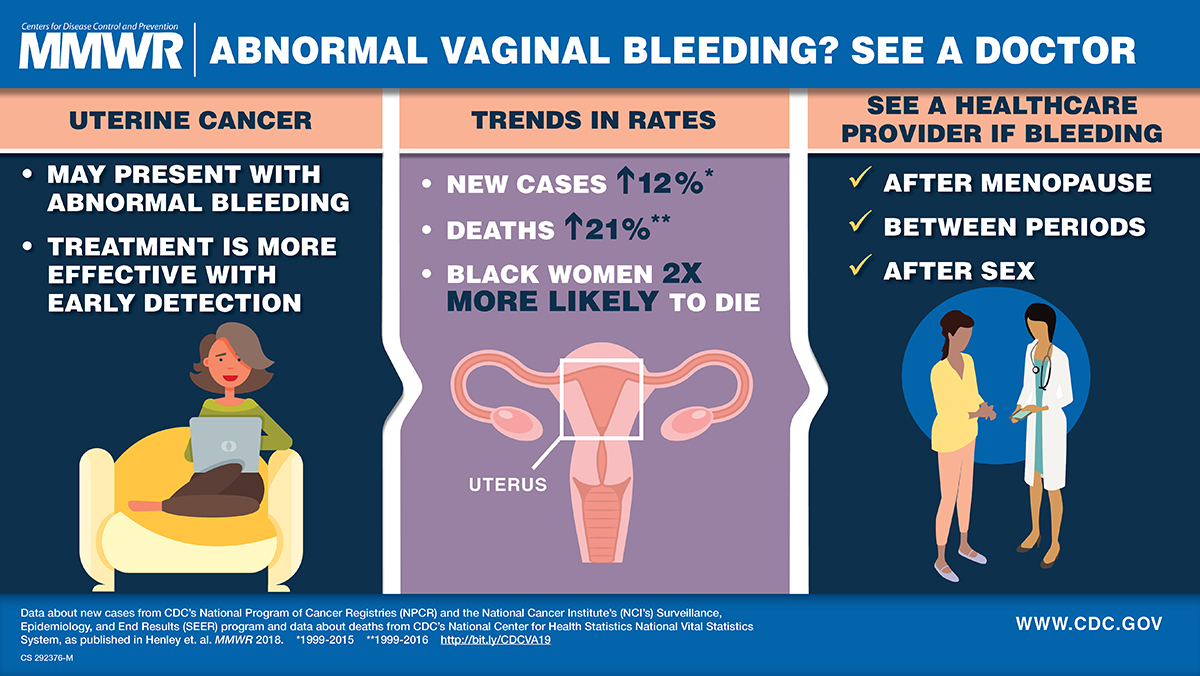
Uterine Cancer Incidence And Mortality United States 1999 2016 Mmwr from www.cdc.gov The reactivation risk may increase around age 50. Symptoms often do not begin until the cancer becomes larger and grows into nearby tissue. Vaginal bleeding after intercourse, between periods or after menopause watery, bloody vaginal discharge that may be heavy and have a foul odor Symptoms of menopause can include hot flushes, mood swings, trouble sleeping (insomnia), tiredness and vaginal dryness. Vaginal bleeding—sometimes cervical cancer mimics menstrual bleeding. It is the most common sexually transmitted disease in the us. I have the night sweats, depression, moodiness, blurred vision, lack of libido. Although regular visits to the physician can play a large part in identifying cervical cancer after menopause, it is also important for women to be aware of symptoms as this can indicate that medical attention is required.
Symptoms often do not begin until the cancer becomes larger and grows into nearby tissue.
(the cervix is the passage which connects the uterus with the vagina.) this type of cancer can affect the deep tissues of the cervix and if not treated, may spread to other parts of the body (metastasize), often affecting the. Examples of symptoms that are associated with cervical cancer include: Cervical cancer is a specific type of cancer which affects the cells of the cervix. Abnormal vaginal bleeding, such as bleeding after vaginal sex, bleeding after menopause, bleeding and spotting between periods, or having (menstrual) periods that are longer or heavier than usual. It can sometimes be difficult to know which symptoms are menopausal and which are the physical and psychological effects of cervical cancer, its treatment and recovery. The patient may notice a longer or heavier menstrual cycle than usual, or spotting or bleeding between periods. Learn about uterine cancer basics, symptoms, diagnosis, treatment, and management at everydayhealth.com. Women who have become menopausal under the age of 45 years as a result of cervical cancer are significantly less likely to start hormone replacement therapy (hrt) or continue it long term as. While bleeding and discharge may be early signs of cervical cancer, more severe symptoms will develop in later stages. Any of the following could be signs or symptoms of cervical cancer: Other symptoms other symptoms of cervical cancer may include pain and discomfort during sex, unusual or unpleasant vaginal discharge, and pain in your lower back or pelvis. Ongoing abdominal pain or discomfort — including gas, indigestion, pressure, bloating and cramps — can signal ovarian or endometrial cancer. However, there are many issues surrounding an iatrogenic menopause in cervical cancer, a variety of potential management options and barriers to treatment.
If menopause starts after treatment, your periods usually stop sooner than they would naturally or straight away, and you may have other symptoms of menopause sooner, such as hot flushes and vaginal dryness. Blood spots or light bleeding between or following periods menstrual bleeding that is longer and heavier than usual bleeding after intercourse, douching, or a pelvic examination Any of the following could be signs or symptoms of cervical cancer: Table showing the symptoms of cervical, ovarian, uterine, vaginal, and vulvar cancers. When this happens, the most common symptoms are:
Endometrial Cancer Overview And More from www.verywellhealth.com Repeated urinary tract infections (utis) weak bones (osteoporosis) increased risk of heart disease. Vaginal bleeding after intercourse, between periods or after menopause watery, bloody vaginal discharge that may be heavy and have a foul odor The patient may notice a longer or heavier menstrual cycle than usual, or spotting or bleeding between periods. While bleeding and discharge may be early signs of cervical cancer, more severe symptoms will develop in later stages. Although women often think bleeding is normal spotting, it's important to see your doctor if you experience: If menopause starts after treatment, your periods usually stop sooner than they would naturally or straight away, and you may have other symptoms of menopause sooner, such as hot flushes and vaginal dryness. The most likely symptoms are: Symptoms of advanced cervical cancer can include:
Table showing the symptoms of cervical, ovarian, uterine, vaginal, and vulvar cancers.
(1) abnormal bleeding, such as bleeding between menstrual periods, after sex, after a pelvic exam, or after (2) menopause, (3) an unusual debt in the amount, color, consistency, or odor, (4) should go to urinate more often, (5) pelvic pain, (6) painful urination. The first identifiable symptoms of cervical cancer are likely to include: The symptoms of cervical cancer. (the cervix is the passage which connects the uterus with the vagina.) this type of cancer can affect the deep tissues of the cervix and if not treated, may spread to other parts of the body (metastasize), often affecting the. Lower abdominal pain or cramping in the pelvis, just below the belly. Although some patients don't experience any symptoms until cervical cancer has advanced, it may be possible to notice signs at an early stage. Other symptoms of menopause include: Symptoms of advanced cervical cancer can include: Vaginal bleeding or spotting in postmenopausal women, even a little amount. Women who have become menopausal under the age of 45 years as a result of cervical cancer are significantly less likely to start hormone replacement therapy (hrt) or continue it long term as. Repeated urinary tract infections (utis) weak bones (osteoporosis) increased risk of heart disease. I have the night sweats, depression, moodiness, blurred vision, lack of libido. It's the same with hpv.
What Is My Moon And Rising Sign Cancer : Cancer,Scorpio, Pisces - Sun Moon Rising signs October ... / You will be able to see what is a good day to ask your boss for a raise, or a good day to work in your garden. . The cancer sign is the natural fourth sign of the zodiac. Cancer ascendant (rising sign) with ruling planet, the moon, in the signs. It all starts with your birth chart: With cancer rising, capricorn, its opposite sign, will be on the cusp of the seventh house. Cancer sun, rising, and moon <33. What to know about rising signs. You may be prone to emotional fluctuations; I'm sagittarius and my moon sign is libra and rising sign is aries. Discover which sign your sun, moon and rising are in here and what they mean for you. This is one ascendant sign that could easily be simply put, they are very sensitive souls. 27 What Is My Rising Sign In Astrology - Astrology, Zodiac .....
30.12.2009 · akibatnya, banyak penggugat yang melakukan gugatan dua kali karena kebanyakan dari mereka tidak melakukan gugatan ganti rugi di ptun karena nilai ganti kerugian yang terlalu kecil, jika dibanding dengan kerugian yang diderita oleh seseorang badan hukum perdata. Alhasil, perusahaan sawit, ks, bebas dari tuntutan ganti rugi sebesar rp 935 m. Biasanya, penggugat mengajukan gugatan untuk mendapatkan putusan hakim … S.h., m.h hakim ialah mempertahankan tata hukum perdata, menetapkan apa yang ditentukan oleh hukum dalam … Menurut soepomo, dalam peradilan tugas. Contoh Surat Gugatan Perdata Tanpa Kuasa Hukum - Nusagates from www.yuksinau.id Menurut soepomo, dalam peradilan tugas. 22.12.2015 · saya ingin menanyakan tata cara membuat jawaban suatu gugatan, apa saja yang dimasukkan di dalam eksepsi dan apa saja yang dimasukkan di dalam ...
How To Make Awesome Christmas Cards - Totally Awesome Christmas Cards For Families - By shrinking the point size in the home menu, we can see it becomes less gaudy and more understated. . Scrapbook paper woven ribbon plastic buttons; In this video, i am going to show you special cards making at home.please like the video, if you liked the card. Be inspired by your surroundings. This layered christmas card idea is another way to create a 3d effect, with christmas trees as the focal point of your homemade card. Here are the best diy christmas cards ideas which you can make in a jiffy. Will create a page break to continue to the inside of your christmas card, or simply scroll down to the new page. By shrinking the point size in the home menu, we can see it becomes less gaudy and more understated. Continue to 25 of 26 below. 3d pop up snow globe christmas card. So, without delay let us check out these diy christmas cards ideas below. ...

/endometrial-cancer-overview-2616643_final1-fb0b1543cb434f88b1e709a48b3b7df0.png)


Komentar
Posting Komentar